


Seeds
Seminole Pumpkin Seeds
$4.49
Free seed shipping from $29.99 in the contiguous U.S., after discounts. Below that, USPS rates depend on your destination. Estimate shipping in your cart before payment.
Shipping & delivery
Shipping and any tax are shown at checkout before payment. Seed orders of $29.99 or more qualify for free shipping; coffee ships at the paid rate shown at checkout.
In-stock seed and soap orders are processed within 1–2 business days, excluding holidays. Seed delivery typically takes 3–5 business days within the continental United States.
Preorders follow the dispatch date on the product page. Mixed orders may follow the longest processing time. Carrier delivery times are estimates.
Read the shipping policy🌱 Open Pollinated
🧪 Germination Tested
📦 Processes in 1 to 2 business days
Free shipping on seed orders $29.99+ · Satisfaction guaranteed
Product details & growing guidance
Seminole pumpkin seeds grow a heat-tolerant Florida heirloom with sweet orange flesh and vigorous vines. This open-pollinated Cucurbita moschata is a winter squash for roasting, pie and storage. Choose a 10 or 20 seed packet for your next planting.
Choose Seminole if you have plenty of growing room and want a heat-tolerant heirloom. A small patio pot is a poor fit for these vigorous vines.
Before you choose your packet
- What you receive: Seeds for gardening. Choose a 10 or 20 seed packet; fruit and plants are not included.
- Seed type: Open-pollinated heirloom
- Species: Cucurbita moschata
- Maturity: About 90 to 120 days; allow the longer end when planning
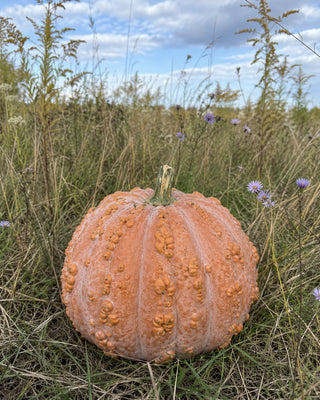
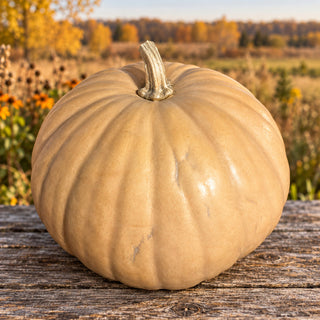
- Fruit: Tan mature rind and orange flesh; fruit size and shape vary
- Space: 6 to 8 feet between plants; rows 8 to 10 feet apart
- Vines: Long, vigorous vines that can reach 25 feet or more
Packed and shipped from Newton, Kansas. Seed-only website orders of $29.99 or more qualify for free shipping under our shipping policy.
Germination Promise: if your seeds fail to germinate under proper growing conditions, contact us within one year and we will replace them or refund your purchase. Read the details.
Our Seminole harvest in Kansas

See our dated Kansas grow-out record, with original photographs and separately identified styled images.
Choosing between two cooking pumpkins?
Compare Seminole and Long Island Cheese for vine space, harvest timing, kitchen uses and saving your own seed.
Planting and care
Plant after frost danger has passed and the soil is consistently warm, ideally around 70°F or warmer. Sow about 1 inch deep in well-drained soil with full sun. Keep the seed zone evenly moist, not waterlogged. If starting indoors, sow 2 to 3 weeks before transplanting, harden off seedlings and avoid disturbing the roots. In Kansas, plan these pumpkins for spring planting and a fall harvest. Count backward from your local first-frost date using the longer maturity estimate, then allow extra time for weather delays. An autumn or winter order is generally for planning the next Kansas growing season. Wait until frost danger has passed and the soil has warmed before planting outdoors.
Is Seminole pumpkin vine borer resistant?
Seminole pumpkin belongs to Cucurbita moschata, a useful choice for gardeners dealing with squash vine borers. Virginia Cooperative Extension identifies moschata varieties as less favored hosts. Resistance is not immunity or a guarantee of harvest. Check stems for entry holes, sawdust-like frass and wilting, and keep watching for squash bugs too. For variety choices and prevention steps, read our vine borer resistant pumpkin guide.
From the garden to the kitchen
Roast for soup, puree for pie, or bake into pumpkin bread. Mature, sound fruit can keep well in a dry, ventilated space. Check stored fruit regularly and use damaged fruit first.
What is a Seminole pumpkin?
Seminole pumpkin is a Florida heirloom winter squash in the Cucurbita moschata species. It has a long history in Indigenous agriculture in Florida. Its mature tan rind, orange flesh and vigorous vines make it useful for gardeners who have space for a cooking and storage pumpkin. Fruit size and shape vary. See UF/IFAS Seminole pumpkin guidance for more about the variety.
Common questions
Which packet should I choose?
Choose 10 seeds for a smaller planting or 20 seeds for a larger plan and backup sowing. Packet count is the number of seeds, not a promise of plants or fruit.
Can I save seed for next year?
This heirloom is open-pollinated. For seed that stays true to the variety, prevent crossing with other Cucurbita moschata plants. Bag unopened male and female blossoms, hand-pollinate using the same variety, rebag the female flower and label the pollination. Store fully dried saved seed in a cool, dry place.
Will these grow in Kansas?
In Kansas, plan these pumpkins for spring planting and a fall harvest. Count backward from your local first-frost date using the longer maturity estimate, then allow extra time for weather delays. An autumn or winter order is generally for planning the next Kansas growing season. Wait until frost danger has passed and the soil has warmed before planting outdoors.
Can I grow Seminole pumpkins on a trellis?
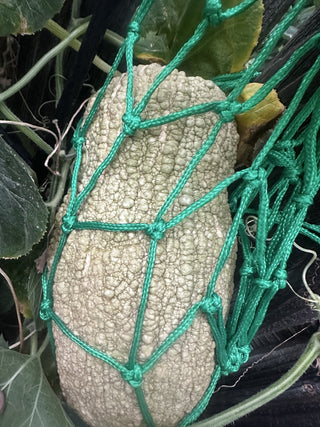
Yes, but plan for long, vigorous vines. Use a strong, securely anchored support and support heavy fruit with slings. A trellis saves ground space without turning Seminole into a compact plant; it still needs adequate root space, sun and water.
How do I know when Seminole pumpkins are ready to harvest?
For mature winter squash, look for a firm tan rind and a stem that is drying and becoming woody. Use the 90 to 120 day estimate as a planning range, then check the fruit itself. Cut the stem rather than pulling the pumpkin from the vine, and harvest before frost.
Growing time, germination, fruit size and yield depend on temperature, soil, pollination and care.
Plan the rest of your patch
- Read the Seminole Pumpkin growing guide
- Browse vine borer resistant seeds
- Kansas garden planning guide
- Autumn Frost F1 seeds
- Long Island Cheese Pumpkin seeds
Growing in Zone 9 or Zone 10? See our Zone 9 and Zone 10 pumpkin guide for warm-climate timing, spacing, and variety comparisons.
Meet your pumpkin grower
Christopher Snow of Autumn Prairie Pumpkins grows pumpkins with his wife, Maggie, in Newton, Kansas. Their interviews cover moschata squash, hand pollination and the care involved in saving seed.
See our original 2026 Seminole grow-out photographs and Seminole planting and care guide. Garden photographs document that season; they do not certify an individual seed lot or guarantee your harvest.
Compare Seminole seed selections
We offer standard Seminole pumpkin seeds and a separate Seminole Larger Fruited selection. Compare the fruit-size and maturity information on each listing before choosing. Both need generous room for vigorous vines. Read our Seminole seed buying guide for packet choices, shipping information and planting resources.
Autumn Prairie Pumpkins is the pumpkin and squash seed line of Autumn Prairie Co. in Newton, Kansas.
Customer reviews
Shipping & Satisfaction
We ship physical products via USPS from Newton, Kansas. In-stock seeds and soap are processed within 1–2 business days, excluding holidays. Coffee ships weekly; orders placed by Wednesday typically ship by Friday. Preorders follow the date on the product page. Free shipping on seed orders $29.99+. Coffee ships at the paid rate shown at checkout. Shipping and taxes are calculated at checkout.
Seeds: USPS rates below the free-shipping minimum. Ships year-round.
Coffee: Packed fresh in Newton and shipped weekly.
Not happy? Contact us and we will make it right.
Growing Tips
Each seed packet includes detailed growing instructions. For additional help, visit our Growing Guides or reach out to us directly.
Our homestead & product care
Packed in Newton, Kansas
Open-Pollinated and Non-GMO Free shipping on seed orders $29.99+ Family Homestead · Newton, KS
Seed life: 4 to 6 years stored cool, dry and dark. Germination is strongest in the first 2 to 3 years, so sow the freshest packet first and test older seed before you plan a bed around it.
Complete your patch
Explore another variety when you are ready. Free shipping on seed orders $29.99+. Coffee ships at the paid rate shown at checkout. Shipping and taxes are calculated at checkout.
From the patch to the porch
A little something for your prairie day
Pair your seeds with pumpkin spice coffee for the morning and a 4.5 oz cold process soap bar for the end of the day.

Pumpkin Spice Soap
$7.99
